How to Write a Journal: A Comprehensive Guide
“What is a diary as a rule? A document useful to the person who keeps it. Dull to the contemporary who reads it and invaluable to the student, centuries afterwards, who treasures it.” — Walter Scott
Journaling is a powerful tool for self-reflection, personal growth, and capturing memories. Whether you’re a seasoned writer or a beginner, keeping a journal can be incredibly rewarding. Here’s a comprehensive guide to help you get started and make the most of your journaling journey.

Table of Contents
- Make a Commitment to Write Regularly
- Choose Tools That Are Convenient and Inspiring
- Just Write: Overcoming the Initial Hurdles and Embracing the Process
- Add Photos and AI-Generated Images to Your Journal
- Experiment with Different Styles
- Review Your Journal Regularly: The Key to Growth and Self-Reflection
Make a Commitment to Write Regularly
Consistency is key when it comes to journaling. To truly reap the benefits of journaling, it’s important to make a commitment to write regularly. Establishing a routine that fits your lifestyle will help you stay on track and make writing a habit. Here are some tips to help you commit to writing consistently:
Set a schedule
Choose a specific time of day or week that works best for you and dedicate it to journaling. Whether it’s every morning before work, during lunch breaks, or before bedtime, having a set schedule will help you prioritize journaling and make it a part of your daily or weekly routine.
Create a comfortable writing space
Having a designated spot for journaling can help you focus on your writing and make it a more enjoyable experience. Find a quiet, comfortable space where you can relax and write without distractions. This could be a cozy corner of your room, a peaceful spot in your garden, or even your favorite coffee shop.
Set realistic goals
It’s important to set achievable goals for your journaling practice. You don’t need to write pages upon pages every day – start small and gradually increase the amount you write as you become more comfortable. Setting realistic goals will help you stay motivated and prevent burnout.
Keep your journal accessible
Make sure your journal is always within reach, whether it’s a physical notebook or a digital app on computer, such as Mémoires. Having your journal easily accessible will make it more likely that you’ll stick to your writing schedule and jot down thoughts as they come to you throughout the day.
Embrace imperfection
Remember that your journal is a personal space for self-reflection and growth – it doesn’t need to be perfect. Don’t worry about grammar, punctuation, or spelling; focus on expressing your thoughts and feelings honestly. If you’re unsure of what to write about, start with a rough paragraph and develop it further as you go along. The more you write, the easier it will become.
Stay accountable
Share your journaling commitment with a friend or family member who can help keep you accountable. They can check in with you regularly to ensure you’re sticking to your schedule and offer encouragement when needed. Alternatively, consider joining a journaling group or online community where you can share your progress and connect with others who share your passion for writing.
By making a commitment to write regularly and incorporating these tips into your journaling practice, you’ll develop a consistent habit that will enrich your life and provide a valuable outlet for self-expression and personal growth.

Choose Tools That Are Convenient and Inspiring
In order to make journaling an enjoyable and sustainable habit, it is important to find tools that are both convenient and inspiring. By selecting a medium that works best for you, you’ll be more likely to stick with your journaling practice and reap the numerous benefits it offers. Here are some factors to consider when choosing the right tools for your journaling journey:
Physical vs. Digital
Some people prefer the tactile experience of writing in a physical notebook, while others find digital software more convenient and efficient. Consider your personal preferences and lifestyle when making this choice. Physical notebooks can be more intimate and personal, allowing for greater creativity through doodling, stickers, and other embellishments. On the other hand, digital journals offer the advantage of easy organization, searchability, and accessibility.
Aesthetics and Functionality
Choose a journal or software that appeals to your sense of aesthetics and provides the functionality you need. A beautiful notebook or well-designed app can inspire you to write more consistently. Look for user-friendly features that make it easy to navigate and customize your journal, such as different fonts, colors, and templates.
Privacy and Security
If you’re concerned about the privacy of your journal entries, consider options that offer password-based encryption. When using software, research the app’s security features and backup options to ensure your content is protected. For physical journals, you may want to keep it in a secure location.
Additionally, you may want to consider avoiding the use of cloud-based services or web applications for storing your journal entries. While cloud storage can be convenient and accessible from multiple devices, it also means that your data is stored on remote servers, which could potentially be accessed by unauthorized individuals or be vulnerable to data breaches. By keeping your journal entries offline on a local storage device, you can further enhance the privacy of your personal reflections.
Ultimate Privacy
Mémoires app comes with secure AES encryption for the whole journal and never sends your entries to the cloud — it stores them on your Mac. It also provides an easy option to backup your journal (just copy the file).Compatibility with Your Lifestyle
Your chosen journaling tool should easily integrate into your daily routine. If you’re always on the go, a pocket-sized notebook or a mobile app might be more suitable for you. Alternatively, if you prefer to journal at home, a larger notebook or desktop software could be a better fit.
Explore Different Tools
Don’t be afraid to experiment with various journaling tools until you find the one that resonates with you. For example, Mémoires is a simple yet effective journaling software that keeps you focused on your content, rather than the app itself. With its minimalist design and easy-to-use interface, Mémoires encourages you to maintain a consistent journaling practice.
In conclusion, finding the right tools for your journaling practice is crucial for long-term success. By considering factors such as convenience, aesthetics, privacy, and compatibility with your lifestyle, you’ll be well on your way to developing a rewarding journaling habit.
Just Write: Overcoming the Initial Hurdles and Embracing the Process
Writing, like any other skill, can be challenging at first, but it becomes more manageable and enjoyable with practice. As Plato wisely said, “The beginning is the most important part of the work.” To make the most out of your journaling experience, it’s essential to overcome the initial hurdles and embrace the writing process.
Take the First Step
The first step in journaling is to open your journal and start typing or writing down your thoughts. This action may seem simple, but it can be the most challenging part for many people. Don’t worry about the quality of your writing at this stage; the goal is to get into the flow and establish a connection with your inner thoughts and emotions.
Warm-up Exercises
Before diving into the core content of your journal entry, consider doing a warm-up exercise to loosen up your writing muscles. You might start by writing about your day, describing your surroundings, or even jotting down random thoughts that come to your mind. Remember, you don’t have to keep your first paragraph or even share it with anyone. The purpose of this exercise is to overcome the initial resistance and get your creative juices flowing.
Embrace Imperfection
One of the most significant barriers to writing is the fear of imperfection. Many people struggle with the idea that their writing isn’t good enough, which can lead to procrastination and avoidance. When journaling, it’s crucial to let go of this fear and embrace the fact that your writing doesn’t have to be perfect. Your journal is a safe space for you to express yourself without judgment or criticism. Allow yourself to make mistakes and learn from them as you continue to develop your writing skills.
Establish a Routine
Consistency is key when it comes to journaling. Establishing a routine can help you build the habit of writing and make it an integral part of your daily life. As mentioned before, choose a specific time and place for journaling, whether it’s in the morning before work, during your lunch break, or at night before bed. Find a comfortable and quiet space that allows you to focus on your writing without distractions. By committing to a routine, you’ll find it easier to overcome the initial challenges of writing and enjoy the process more.
Stay Flexible and Open-Minded
Journaling is a personal and dynamic process, and there’s no one-size-fits-all approach. Be open to experimenting with different writing styles, prompts, and techniques. If you find that a particular method isn’t working for you, don’t be afraid to switch things up and try something new. The more you explore and adapt, the more you’ll discover what works best for you and your unique journaling journey.
In conclusion, the key to successful journaling lies in taking the first step, embracing imperfection, and being consistent and open-minded. By overcoming the initial challenges and diving into the writing process, you’ll unlock the countless benefits of journaling and develop a deeper understanding of yourself and the world around you.
Add Photos and AI-Generated Images to Your Journal
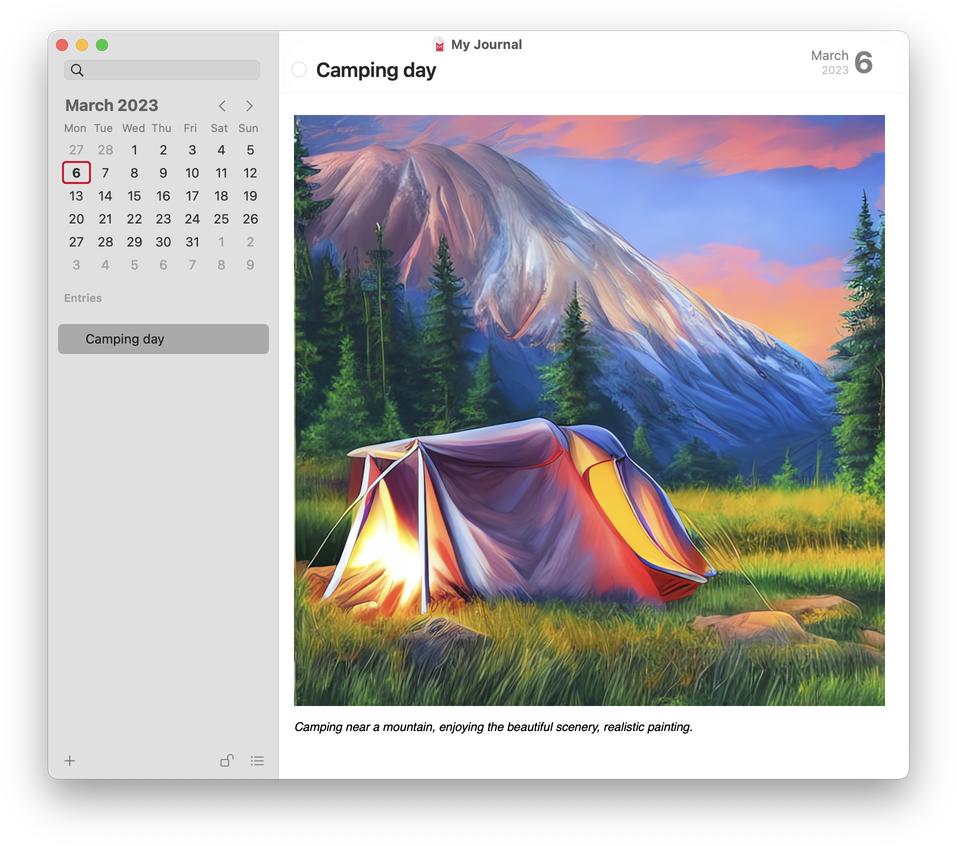
A picture is worth a thousand words, and including images in your journal can help capture memories and emotions that words alone cannot describe.
Incorporate Personal Photos
Adding personal photos to your journal entries not only makes them more visually appealing but also helps you remember specific moments and experiences in greater detail. You can include pictures of people, places, or things that were significant to your day. For instance, you can add a photo of a beautiful sunset you witnessed, a delicious meal you cooked, or a memorable event you attended. These images will serve as visual reminders of the experiences and emotions you felt at the time.
How to add an image
In Mémoires you can easily add an image to your entry by dragging it into the editor window. In fact, you can add as many images as you like.Enhance Your Journal with AI-Generated Images
In addition to personal photos, you can also enhance your journaling experience with AI-generated images. Artificial intelligence has become a hot topic in recent years, with many tools emerging to assist us in our daily tasks. While using text-generating AI for journaling may not be ideal, as the purpose of journaling is to express your own thoughts and experiences, AI image generation can be a great way to add a unique and creative touch to your journal entries.
Read our guide on how to add AI-generated images to your journal.
By combining personal photos and AI-generated images, you can create a rich, visually engaging journal that captures the essence of your experiences and emotions. This comprehensive approach to journaling will make your entries more enjoyable to read and reflect upon while also providing a unique and creative outlet for self-expression.
Sketches
Another unique way to enhance your journal entries is by using the Quick Drawings feature in the Mémoires app. This feature allows you to create quick, hand-drawn illustrations right within the program, adding a personal touch to your entries. Sketches can be an excellent way to express your thoughts and feelings that may be difficult to put into words.
Experiment with Different Styles
One of the most exciting aspects of journaling is the freedom to explore and experiment with various writing styles. This allows you to discover your own unique voice and express your thoughts and feelings in creative ways. Here are some ideas to help you experiment with different styles in your journal entries:

Conversational Style
Write as if you’re having a conversation with yourself, your journal, or an imaginary or real person. This approach can make your writing feel more natural and help you gain insights from different perspectives.
Letter Writing
Compose your journal entry as if it were a letter to a friend, family member, or even your future self. This style can help you articulate your thoughts more clearly and allow you to communicate your experiences and emotions effectively.
Newspaper Column
Pretend you’re a columnist for a newspaper or magazine, and write your journal entry in a journalistic style. This can help you practice concise writing and encourage you to think critically about the events and experiences you’re documenting.
Stream of Consciousness
Let your thoughts flow freely onto the page without worrying about grammar, punctuation, or structure. This style allows you to explore your innermost thoughts and feelings without any constraints, which can be both liberating and insightful.
Poetry and Prose
Experiment with writing your journal entries in the form of poems or prose. This can help you develop your creativity and express your emotions in a more artistic way.
Lists and Bullet Points
If you’re pressed for time or simply want to capture the essence of your day, try writing your journal entry as a list or using bullet points. This style can help you focus on the most important aspects of your experiences and make it easier to review your entries later.
Visual Journaling
Incorporate sketches, doodles, or other visual elements into your journal entries. This can help you express your thoughts and emotions in a different way and add variety to your journal.
Mixed Media
Combine different writing styles, formats, and media in a single journal entry. For example, you could write a letter to a friend and include a poem, a sketch, or a newspaper-style column within the same entry. This approach can help you explore your creativity and keep your journaling experience fresh and engaging.
Try video journaling
We have a companion app for Mac called Video Mémoires that you can use to record your daily video journals. Learn more...Remember that there’s no right or wrong way to write in your journal. The key is to be open to experimentation and enjoy the process of discovering your unique voice. As you try different styles, you’ll likely find that some resonate more with you than others, and that’s perfectly fine. Embrace the styles that work best for you and continue to challenge yourself to grow and evolve as a writer.

Review Your Journal Regularly: The Key to Growth and Self-Reflection
One of the most crucial aspects of maintaining a journal is to review your entries regularly. This practice offers numerous benefits, including gaining insights into your personal growth, identifying patterns in your thoughts and emotions, and enhancing your self-awareness. To make the most of your journaling journey, consider the following tips:
Schedule Regular Review Sessions
Establish a routine by setting aside specific times to review your journal entries, such as once a week, every two weeks, or once a month. By doing this, you ensure that you consistently reflect on your past experiences and emotions, which can lead to valuable insights and revelations.
Create a Comfortable Review Environment
Find a quiet, comfortable space where you can focus on reading your journal entries without distractions. This will enable you to fully immerse yourself in your thoughts and emotions, leading to a more profound understanding of your personal journey.
Reflect on Your Emotional State
As you read through your past entries, pay close attention to the emotions and feelings you experienced at the time. This can help you identify recurring themes, gain a deeper understanding of your emotional triggers, and develop strategies for managing challenging emotions in the future.
Analyze Your Personal Growth
Look for indications of personal growth and development in your journal entries. This can include changes in your perspectives, the achievement of goals, or overcoming obstacles. Acknowledging and celebrating your progress can boost your self-esteem and motivate you to continue growing and evolving as an individual.
Write About Your Reactions
After reviewing your journal entries, consider writing a new entry that captures your reactions and reflections on what you’ve read. This can help you process your thoughts and emotions, as well as track your ongoing development over time.
Adjust Your Journaling Practice as Needed
Based on your review sessions, you may find that certain aspects of your journaling practice need to be adjusted. This can include experimenting with different writing styles, incorporating new prompts, or setting new goals for your journaling journey. Remember that your journal is a dynamic tool that should evolve along with you.
In conclusion, regularly reviewing your journal is an essential component of a successful journaling practice. By dedicating time and effort to reflecting on your past entries, you can gain valuable insights into your personal growth, emotions, and experiences. By committing to a consistent writing and review schedule, choosing the right tools, and adapting your journaling practice as needed, you can create a journal that serves as a powerful record of your journey towards self-discovery and personal growth.
Happy journaling!
Learn more
Click here to learn how Mémoires can help you keep your journal.